Sunrise, the 2024 vampire thriller directed by Andrew Baird, is a film that defies easy categorization. Part horror, part crime drama, and part social commentary, it weaves a haunting tale of redemption, revenge, and the human condition.
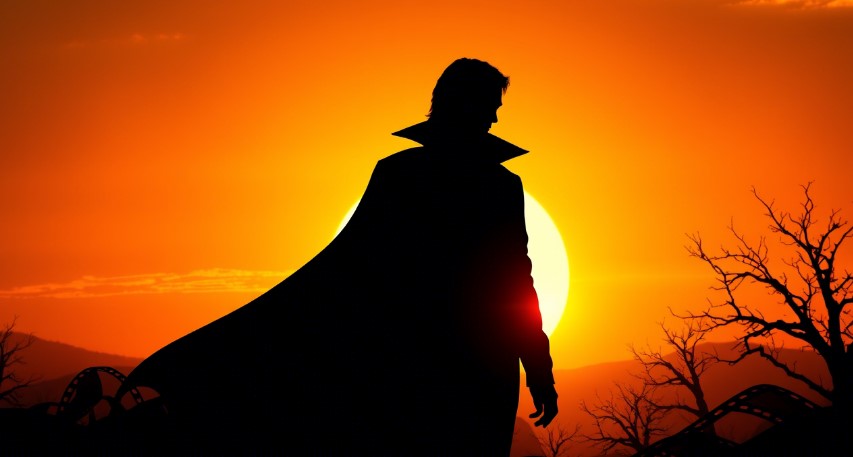
Set in a decaying rural town, the film stars Guy Pearce as Fallon, a morally ambiguous detective, and Alex Pettyfer as Reynolds, a tormented vampire seeking justice for his family.
While the vampire genre has been explored countless times, Sunrise breathes new life into it by blending gothic atmosphere with gritty realism, creating a film that is as thought-provoking as it is unsettling.
A Fresh Take on Vampire Mythology
At its core, Sunrise is a story about monsters—both literal and metaphorical. Reynolds, the vampire protagonist, is not the suave, aristocratic figure often depicted in vampire lore. Instead, he is a brooding, almost feral creature, driven by grief and rage after his family is brutally murdered by a local crime syndicate. His transformation into a vampire is less a curse and more a means to an end, a tool for vengeance. This inversion of traditional vampire tropes is one of the film’s most compelling aspects. Rather than focusing on the seduction or immortality often associated with vampires, Sunrise explores themes of loss, justice, and the cost of revenge.
The film’s mythology is deliberately sparse, avoiding lengthy exposition about vampire origins or rules. Instead, it focuses on the visceral experience of being a vampire—the hunger, the isolation, and the moral ambiguity of preying on others to survive. This minimalist approach allows the audience to engage with Reynolds as a character rather than a supernatural archetype, making his journey all the more poignant.
Gothic Atmosphere and Visual Mastery
One of Sunrise’s greatest strengths is its visual storytelling. Cinematographer James Mather bathes the film in a palette of muted grays and deep reds, evoking a sense of decay and foreboding. The town itself becomes a character, its abandoned factories and crumbling homes reflecting the moral rot at the heart of the story. The use of shadows and light is particularly striking, with Reynolds often lurking in the darkness, his eyes glowing faintly like embers.
The film’s pacing is deliberate, allowing the tension to build gradually. Scenes of violence are interspersed with moments of quiet introspection, creating a rhythm that keeps the audience on edge. The horror elements are understated but effective, relying more on atmosphere and implication than graphic gore. This restraint makes the film’s few moments of visceral violence all the more shocking.
Performances That Elevate the Material
Guy Pearce delivers a standout performance as Fallon, the weary detective tasked with hunting Reynolds. Pearce brings a world-weariness to the role, his character’s cynicism masking a deep-seated guilt. His interactions with Reynolds are charged with tension, as the two men—both haunted by their pasts—circle each other in a deadly game of cat and mouse.
Alex Pettyfer, meanwhile, gives a career-defining performance as Reynolds. His portrayal is raw and vulnerable, capturing the character’s inner turmoil as he grapples with his newfound nature. Pettyfer’s physicality is also noteworthy; he moves with a predatory grace, his every gesture conveying both menace and melancholy. The chemistry between Pearce and Pettyfer is electric, their scenes together serving as the emotional core of the film.
Themes of Redemption and Moral Ambiguity
At its heart, Sunrise is a meditation on redemption and the nature of evil. Reynolds, despite being a vampire, is portrayed as a sympathetic figure, his actions driven by a desire to protect the innocent and avenge the wronged.
Fallon, on the other hand, is a human who has committed his own share of sins, his badge offering little absolution. The film blurs the line between hero and villain, forcing the audience to question who the real monsters are.
This moral ambiguity is further underscored by the film’s exploration of systemic corruption. The crime syndicate that Reynolds targets is portrayed as a symptom of a larger societal decay, its members exploiting the vulnerable with impunity.
In this context, Reynolds’ vampirism becomes a metaphor for the marginalized fighting back against their oppressors, a theme that resonates deeply in today’s socio-political climate.
A Few Missteps
While Sunrise is a strong film overall, it is not without its flaws. The supporting characters, particularly the members of the crime syndicate, feel underdeveloped, serving more as plot devices than fully realized individuals. Additionally, the film’s ending, while emotionally satisfying, leans slightly into cliché, wrapping up the story a bit too neatly given its otherwise complex tone.
Conclusion: A Genre-Defying Masterpiece
Sunrise is a film that transcends its genre trappings, offering a fresh and compelling take on the vampire mythos. Its exploration of themes like redemption, justice, and moral ambiguity elevates it above typical horror fare, while its stunning visuals and powerhouse performances make it a must-watch for fans of atmospheric cinema.
For those tired of the same old vampire stories, Sunrise is a revelation—a film that proves there is still new territory to explore in even the most familiar genres. It is a haunting, thought-provoking journey that lingers long after the credits roll, a testament to the enduring power of storytelling. Whether you’re a horror aficionado or simply a lover of great cinema, Sunrise is a film that deserves to be seen.