Introduction
From the Big Bang to Modern Humanity: Ever looked up at the night sky and wondered how it all began? You’re not alone. The universe’s journey—from a fiery explosion to our modern digital lives—is nothing short of a cosmic miracle. It’s a tale filled with stars, stardust, and smartphones.
Let’s unravel this journey step by step, from the beginning of time to where we stand today—on a small blue planet, connected to the cosmos in ways more profound than we realize.
The Big Bang – The Fiery Beginning
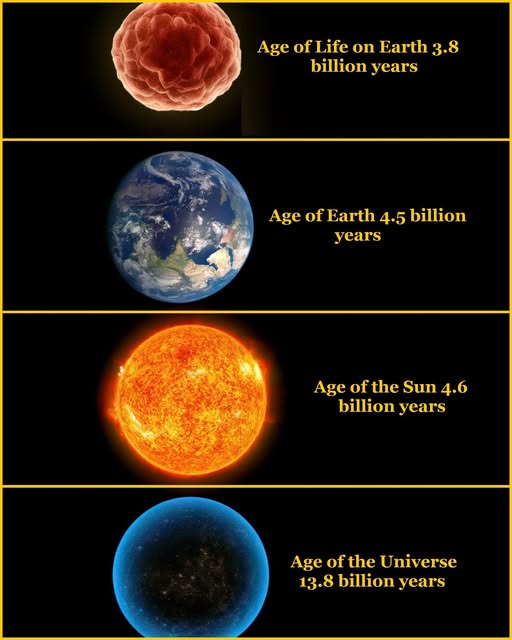
From the Big Bang to Modern Humanity: About 13.8 billion years ago, everything we now know—space, time, matter, and energy—exploded into existence. This wasn’t an explosion in space; it was space exploding. The Big Bang marked the true birth of the universe.
In a fraction of a second, the universe expanded at a mind-boggling rate in a process called cosmic inflation. The temperatures were unimaginably high, and only the simplest particles could survive.
Formation of the Early Universe
As the universe cooled, particles combined to form the first atoms—mainly hydrogen and helium. These elements floated freely for hundreds of millions of years until gravity began pulling them together, seeding the first stars and galaxies.
Stars and Galaxies Take Shape
The first stars lit up the universe like cosmic lanterns. These early giants lived fast and died young, exploding as supernovae, which forged heavier elements like carbon, oxygen, and iron.
Supernovae and Stardust
Every atom in your body—carbon in your cells, calcium in your bones, iron in your blood—was forged in the heart of a dying star. In essence, you are made of stardust.
Our Solar System is Born
About 4.6 billion years ago, one of these stellar explosions triggered the formation of our solar system. A spinning disk of gas and dust collapsed to form the Sun, with the remaining debris clumping together to form planets—including Earth.
Life Sparks on Earth
Around 700 million years after Earth formed, something amazing happened—life began. At first, it was just single-celled organisms in the oceans. Over billions of years, life evolved, diversified, and eventually climbed onto land.
Rise of Human Intelligence
Fast forward to just a few million years ago, and our ancestors were walking upright, using tools, and controlling fire. Evolution gave rise to Homo sapiens—humans—with large brains and the ability to think, reason, and dream.
Civilizations and Curiosity
We built societies, formed languages, and started asking the big questions: Where do we come from? What lies beyond the stars? Ancient astronomers tracked the heavens and built monuments aligned with celestial bodies.
From Telescopes to Technology
With the invention of the telescope, we unlocked new views of our universe. Scientists like Galileo and Newton reshaped our understanding. Fast forward to NASA, space probes, and Hubble, and we’re now seeing galaxies billions of light-years away.
Smartphones and Stardust
It’s wild to think about, but the materials in your smartphone—gold, silicon, lithium—were all created in the cores of ancient stars. Every device we use is a product of cosmic history.
Our tech may be modern, but its building blocks are truly ancient.
Humans: The Universe’s Storytellers
We’re more than just inhabitants—we are the narrators of the universe’s story. Through science, art, philosophy, and imagination, we piece together the puzzle of existence.
We’re not separate from the cosmos—we’re its latest expression.
Where Are We Headed?
We’ve come far, but this is just the beginning. With missions to Mars, plans for moon bases, and telescopes that look back in time, the next chapters are still unwritten.
The universe is still expanding, and so is our thirst to understand it.
Conclusion: The Eternal Thread of Cosmic Evolution
From a primordial flash of light to the flicker of screens in our hands, the universe has woven a grand tale of transformation. We are a fleeting yet powerful moment in its timeline—a species made of stars, searching for meaning in the stars.
Our story is far from over. We’re standing on the shoulders of cosmic giants, looking out into an ocean of possibilities.
FAQs
1. How old is the universe?
The universe is approximately 13.8 billion years old, based on observations of cosmic microwave background radiation.
2. What was before the Big Bang?
We don’t have a definite answer. Time and space as we know them likely didn’t exist before the Big Bang—so it may not even make sense to ask what came “before.”
3. Are we made of stardust?
Yes! Almost every element in our bodies—carbon, oxygen, iron—was formed inside stars. When those stars exploded, they scattered their ingredients across the galaxy.
4. What role does Earth play in the universe?
While Earth is just a tiny speck in the cosmos, it’s the only known planet to harbor life—making it incredibly special.
5. Will we ever understand everything about the cosmos?
Maybe not everything, but we’re learning more each day. The universe is vast and mysterious, but curiosity keeps pushing us forward.
This article written by AI. this article related any issue, so please Comment in comment box.