Colorado River Runs Crimson Through the Grand Canyon, Prompting Urgent Scientific Probe
Grand Canyon region, Arizona – July 2025
The Colorado River is naturally reddish due to the high silt content in its water, a result of its course through red rock formations. It is not currently turning blood red in a way that suggests a new, unusual phenomenon. The recent viral posts about a “blood red river” in Argentina, which were shared out of context, are not related to the Colorado River.
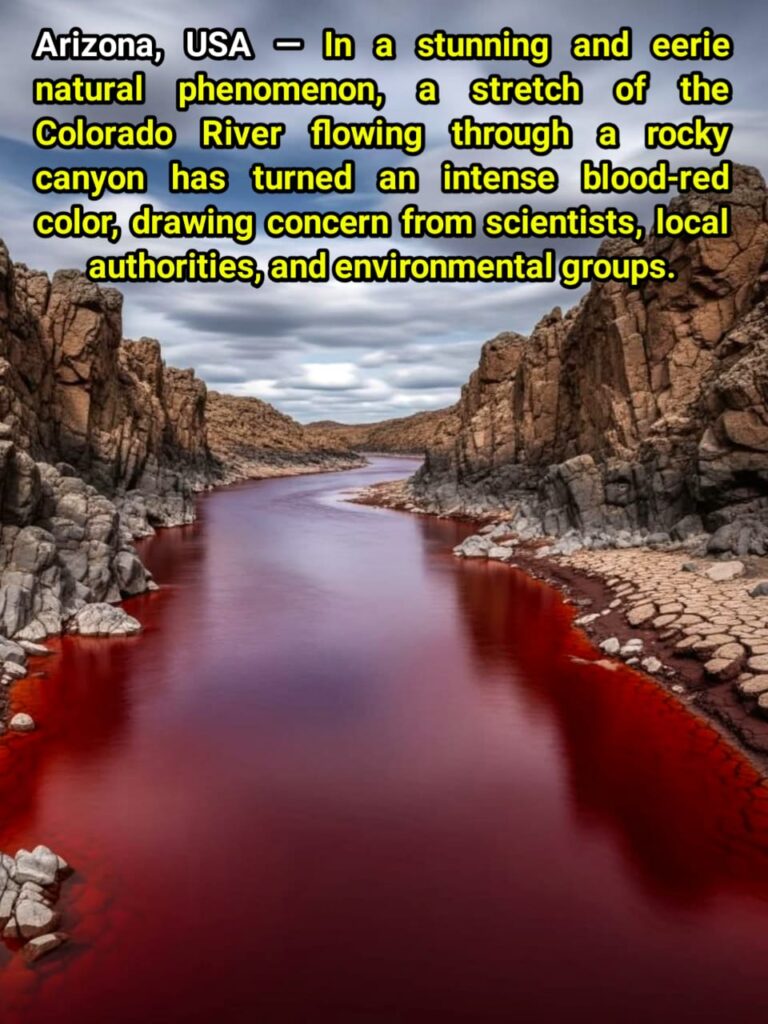
Colorado River: A startling natural spectacle unfolded at dawn today when hikers and drone enthusiasts spotted a deep scarlet stretch of the Colorado River coursing through a remote canyon near the Arizona‑Utah border. The vivid, blood‑red ribbon cutting through rugged brown and gray rock sent shockwaves across social media and quickly mobilized scientists, environmental agencies, and tribal leaders.
Firsthand Sightings and Swift Response Colorado River
Eyewitness videos show the crimson water glinting beneath brooding, cloud‑laden skies—a scene equal parts mesmerizing and unsettling. Within hours, teams from the U.S. Geological Survey (USGS) and the Arizona Department of Environmental Quality (ADEQ) descended on the site to sample water, sediments, and air. Boating has been temporarily suspended, and park rangers are warning visitors not to touch or collect the unusual water until test results are in.
Working Hypotheses
Early speculation centers on three main possibilities:
- Algal or Microbial Bloom – Specialists point to Dunaliella salina and other salt‑loving microorganisms known to release red carotenoid pigments under high‑salinity stress. While such blooms famously tint lakes and evaporation ponds, a river event of this magnitude is rare.
- Mineral or Chemical Runoff – Heavy storms last week may have dislodged iron‑rich sediments or flushed industrial by‑products from upstream mining sites. Elevated iron or manganese can impart rusty or reddish tones to water.
- Drought‑Exacerbated Concentration – Years of diminished flow on the Colorado have left banks cracked and desiccated. Lower volumes can amplify any minerals, metals, or organic compounds already present, intensifying their visual impact.
“We’re running toxicity screens and dissolved‑oxygen tests around the clock,” said Dr. Carla Estoma, an environmental biochemist leading the ADEQ field team. “Right now, we don’t see an immediate threat to wildlife or humans, but we’re treating this anomaly with extreme caution.”
Cultural and Environmental Stakes
For Indigenous communities, the river’s sudden transformation resonates far beyond scientific curiosity. “The Colorado is the artery of our land and spirit,” emphasized Chief Eli Croft of a neighboring tribal nation. “When that lifeline turns red, it carries a message no one can ignore.”
Next Steps
Colorado River: Comprehensive lab analyses are expected within 48 hours. Authorities plan to publish real‑time updates and reopen the affected reach only if contaminant levels fall within safe parameters. In the meantime, visitors are urged to admire the phenomenon from a distance and respect all closures.
Whether the crimson torrent proves a fleeting quirk of nature or a warning sign of deeper ecological stress, today’s events underscore the fragile balance of one of North America’s most iconic rivers—and humanity’s duty to safeguard it.
Important Note: This information is taken from Facebook and Google